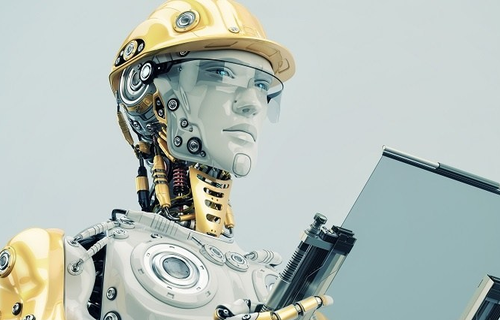
AI has become a must thing to use to grow your construction business from experimental pilots to estimation tools that drive efficiency, Accuracy safety, and innovation across project lifecycles. And if you’re not taking advantage of AI in your business then you’re missing out something so important which will throw you out of the market soon. Major firms like Shawmut Design and Construction now even use GPS-enabled AI to monitor compliance and forecast safety incidents for over 30,000 workers in real time, greatly reducing accidents and insurance costs. Generative AI platforms such as Civils.ai and Buildots are transforming plan analysis and scheduling, automatically processing site data and contract documents to answer complex queries in seconds. Predictive maintenance systems powered by smart sensors and machine learning are made to slash equipment downtime, with the market projected to grow to US$1.69 billion by 2030 Beehive InsuranceGlobeNewswire. Simultaneously, the construction robots market—valued at USD 1.15 billion in 2023—is forecast to expand to over USD 10 billion by 2032, signaling a huge expansion in automation adoption to overcome labor shortages and boost productivity.

Latest Trends and Case Studies in AI-Driven Construction
AI for Worker Safety
- Real-Time Hazard Detection: Shawmut Design and Construction uses computer vision and GPS-enabled sensors to automatically detect missing fall protection or unsafe equipment usage, alerting managers instantly to mitigate risks.
- Ethical Data Practices: To address privacy concerns, Shawmut anonymizes worker data and implements opt‑in protocols, balancing safety gains with transparent data governance.
Generative AI in Planning and Design
- Automated Plan Analysis: Platforms like Civils.ai and Buildots can ingest architectural blueprints and site logs, then generate actionable insights on scheduling, materials, and cost optimizations within seconds Finance & Commerce.
- Next‑Gen Generative Design: AI driven design tools from Autodesk now incorporate hybrid reasoning models, offering dozens of optimized layout options that respect budget, materials, and regulatory constraints cutting design cycles by up to 40% Autodesk.
Enhanced Benefits of AI-Powered Tools
Efficiency and Accuracy
- Data‑Driven Scheduling: Machine learning models trained on historical project data forecast potential bottlenecks and recommend resource allocations, improving on‑time delivery by an estimated 20% Medium.
- Supply Chain Optimization: AI algorithms continuously adjust procurement plans based on real‑time material availability and weather forecasts, reducing stockouts and overages by up to 15%.
Predictive Maintenance and Asset Management
- Smart Sensor Networks: Construction firms deploy AI enabled sensors on heavy equipment to predict failures days in advance, cutting unplanned downtime by 25% and extending machinery lifespan.
- Market Growth: The global AI‑based predictive maintenance market is projected to reach US$ 1.69 billion by 2030, driven by demand for cloud and edge computing investments.
Autonomous Robotics
- Bricklaying and 3D Printing: Auto robots like TyBOT (rebar tying) and Dusty (precision layout) operate around the clock with minimal supervision, boosting productivity and precision on-site.
- Market Expansion: The construction robotics sector, valued at USD 1.15 billion in 2023, is expected to grow at a CAGR of 15.18% to USD 4.10 billion by 2032, reflecting rapid tech adoption to counter labor shortages GlobeNewswire.
Digital Transformation Accelerators
- Cloud‑Based Collaboration: Platforms such as Procore and PlanHub enable real‑time document sharing and progress tracking, enhanced by AI for automatic tagging and priority scoring constructionindustryai.com.
- Immersive Visualization: AI‑powered VR solutions let stakeholders explore fully rendered project models before groundbreaking, identifying clashes and alignment issues early to avoid costly rework AEM Tradeshows – ConExpo Con/Agg.
Overcoming Challenges in AI Adoption
- Bridging the Skills Gap: Human‑centric AI frameworks emphasize training and change management, ensuring experienced workers view AI as an empowering collaborator rather than a threat Forbes.
- Cost‑Effective Rollouts: A phased implementation approach, starting with high‑impact, low‑complexity use cases like safety monitoring helps smaller firms validate ROI before scaling to broader AI deployments Forbes.
- Infrastructure Readiness: Upgrading jobsite connectivity and investing in edge computing ensures reliable AI performance, even in remote or harsh construction environments Construction Dive.
The Future of AI in Construction
- Autonomous Fleet Operations: By 2025, autonomous excavators and concrete mixers will perform repetitive tasks with minimal human input, freeing crews to focus on high‑value work Forbes.
- Sustainable Building Practices: AI driven energy modeling will optimize HVAC, lighting, and materials to reduce carbon emissions, with case studies showing up to 16% energy savings in smart buildings Time.
- AI‑Powered Administration: Advanced natural language interfaces will automate report generation, permit filings, and contract negotiations, accelerating administrative workflows and reducing paperwork by up to 50% Sequoia Capital.
By using these advanced innovations into every phase—from planning and design to execution and maintenance—forward‑thinking construction firms are not just building structures but pioneering a smarter, safer, and more sustainable future for the industry. SO if your competitors Automates the major of their business using AI, they would for sure be more productive in both operation and marketing. So search for the AI tools you can use to become smarter and sharper and compete in the industry of construction.